
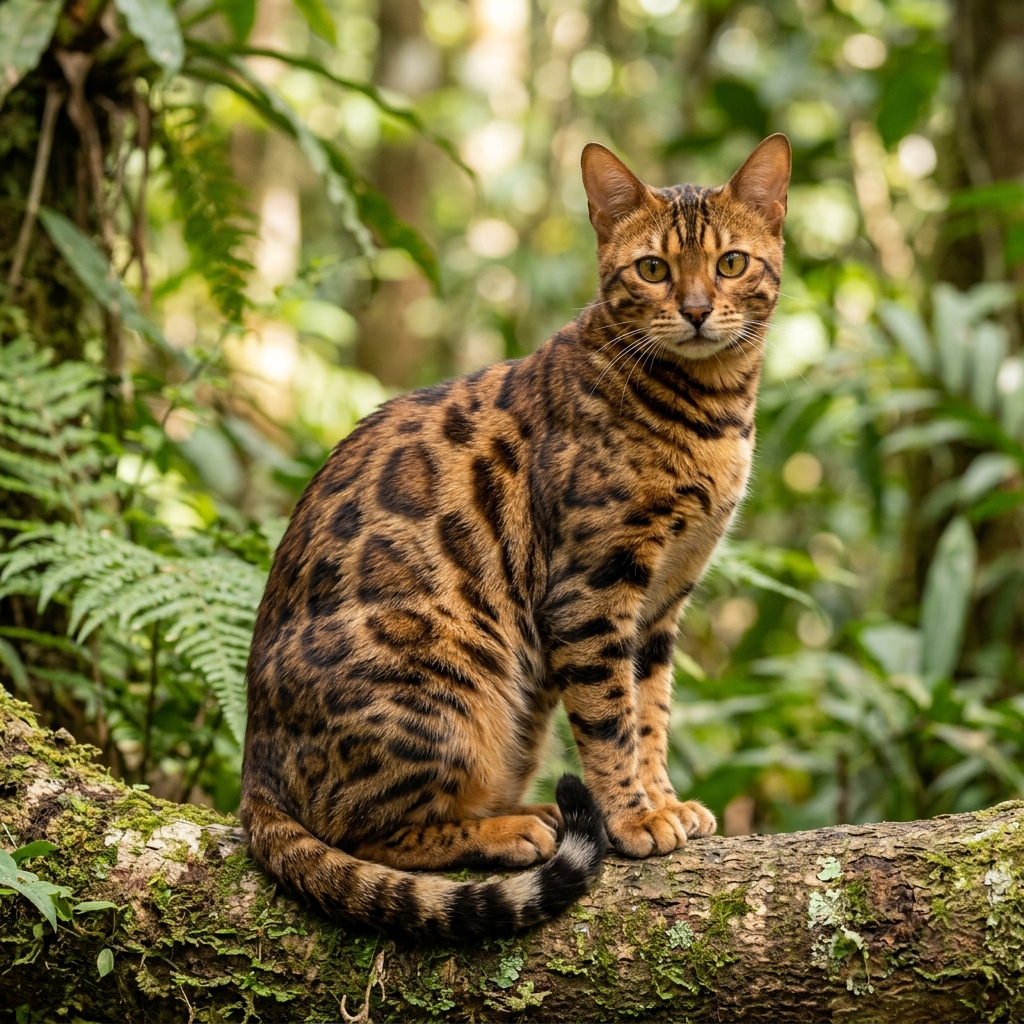
1. Origins and Breed History
Despite popular misconceptions, the Bengal cat is not related to the Bengal Tiger. Rather, it is a hybrid breed created by crossing the wild Asian Leopard Cat (ALC)—a small, spotted wild feline—with domestic cats. Early hybrid breeding records appeared in the late 19th century, but the modern breed was established in the 1960s and 1980s by genetics researcher Jean Mill.
Mill wished to deflect the demand for poached wild cat pelts by providing a domesticated alternative with a wild appearance. By crossing the ALC with domestic breeds like the black tabby and the Indian Mau, she created the famous "Millwood" lineage. Simultaneously, breeders Greg and Elizabeth Kent developed similar hybrids using Egyptian Maus. Most modern Bengals stem from these foundational lines. Today, TICA (The International Cat Association) recognizes Bengals that are fourth-generation (F4) or later to ensure a fully docile, domesticated temperament.
2. Appearance and Markings
The most famous trait of the Bengal is its magnificent, wild-looking pelt. They feature a sleek, muscular body, short rounded ears, and large oval eyes. Their fur has a smooth, silky texture and a distinct "glitter" sheen that sparkles in bright light. Bengals weigh between 7 and 12 pounds, with an average lifespan of 12 to 16 years.
They display two primary coat patterns:
- Spotted: Marked by spots running along their back and sides. Multi-colored spots are called "rosettes," closely resembling jaguar markings.
- Marbled: Marked by horizontal, flowing swirls and stripes.
3. Personality and Behavior
Bengal cats possess high intelligence, athletic curiosity, and playfulness. They are sharp learners, capable of performing tricks like dogs and understanding verbal commands. They are also known for their love of water, often jumping in the shower or playing in sink basins.
Because they are highly active, Bengals require constant mental and physical stimulation. They thrive in homes with puzzle toys, climbing towers, and playmates (including friendly dogs). If left alone without stimulus, they can yowls or develop aggressive tendencies.
Exotic Beauty Needs Exceptional Protection
Insure your high-energy Bengal cat against congenital heart conditions and eye diseases with Lemonade Pet Insurance, starting from $12/month.
Get Bengal Cat Pet Insurance – Plans starting from around $12/month4. Common Bengal Cat Health Problems
Like all purebred cats, Bengals are genetically predisposed to several hereditary health conditions:
- Hypertrophic Cardiomyopathy (HCM): A thickening of the heart muscle leading to heart failure, lethargy, panting, and painful blood clots in the hind limbs. Screening by a veterinary cardiologist is highly recommended.
- Progressive Retinal Atrophy (PRA): A recessive genetic disorder causing deterioration of the retina, leading to slowly progressive blindness in young kittens or adult cats.
- Cataracts: Inherited cloudiness of the eye lens that blocks light, causing visual impairment or eventual blindness if left untreated.
Feline Protection Made Simple
Enroll your Bengal kitten in pet insurance early to secure lifetime coverage for hereditary heart and eye conditions.
Get Bengal Cat Pet Insurance – Plans starting from around $12/monthKey Takeaways
- Unique Hybrid Heritage: Domesticated but displays an exotic leopard-like coat with rosettes or marble patterns.
- Highly Active Feline: Requires significant climbing space, puzzle toys, and attention to avoid boredom.
- Inherent Genetic Risks: Susceptible to cardiomyopathy (HCM) and PRA blindness, necessitating early pet insurance enrollment.