
1. Origins and Breed History
The Bernese Mountain Dog has ancestral roots dating back over two thousand years. Historical records suggest the breed descended from mastiff-like working dogs that traveled with Roman soldiers across the Swiss Alps. By the 18th century, they had become common farm assistants in midland Switzerland, helping dairy farmers (known as Senn) herd cattle and pull heavy carts to local markets. The breed was eventually named Berner Sennenhund after the Canton of Bern region.
It is one of four distinct Swiss mountain dog varieties, alongside the Greater Swiss Mountain Dog, the Appenzeller Sennenhund, and the Entlebucher Sennenhund. The Bernese is unique among them as the only variety with a long, silky double coat. As agricultural machinery reduced the demand for draft dogs, the breed transitioned into a beloved companion. It was introduced to the United States in 1926 and officially recognized by the American Kennel Club (AKC) in 1937.
2. Physical Appearance
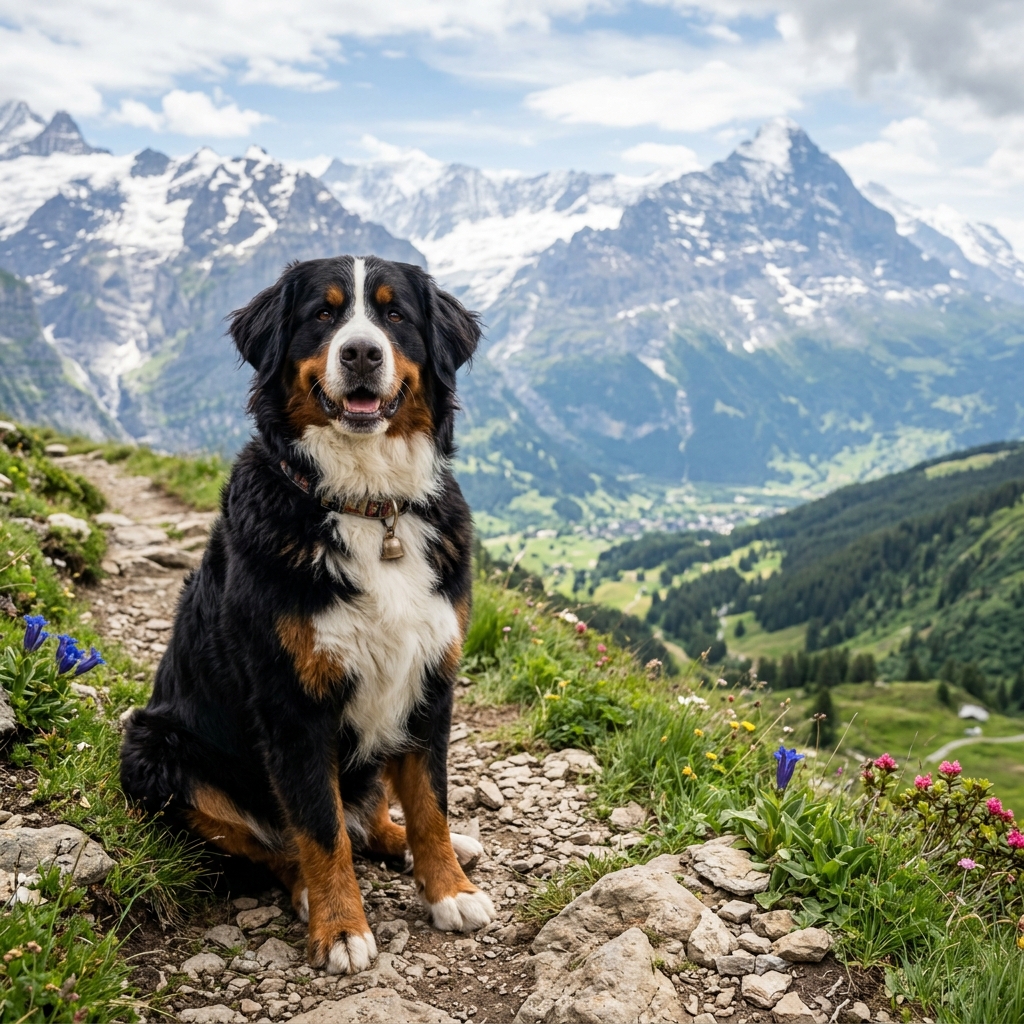
The Bernese Mountain Dog is recognized by its beautiful, heavy tricolored coat. Their weather-resistant double coat is primarily jet black with rich rust and bright white markings on the face, chest, throat, legs, and paws. Many dogs display a prominent white markings pattern on their chest (likened to a Swiss cross), a white stripe behind the neck (often called a "Swiss kiss"), and a white muzzle shape.
They feature broad, sturdy heads, small triangular ears that fold forward, and expressive dark eyes. Females can weigh up to 105 pounds, while males reach up to 110 pounds or more, standing between 23 and 28 inches at the shoulder.
3. Temperament and Personality
Known for their cheerful, affectionate, and protective personality, Bernese Mountain Dogs are wonderful family companions. They are patient and playful with children and get along well with other household pets. Due to their working roots, they are quick learners and highly obedient, though early socialization is recommended to prevent timidness or stubborn habits.
These dogs thrive on human interaction and do not tolerate isolation or long periods in kennels. They are outdoor-loving animals that make excellent hiking companions, showing surprising speed and agility for their massive size. They need structured exercise to burn off excess energy and keep their mind stimulated.
Keep Your Companion Healthy with Lemonade
Lemonade Pet Insurance covers diagnostics, genetic issues, and emergency surgeries, with zero paperwork and instant claims processing through their mobile app.
Get Bernese Mountain Dog Pet Insurance – Plans starting from around $12/month4. Grooming and Daily Care
The long-haired coat of a Bernese Mountain Dog requires weekly brushing to remove loose undercoat and prevent matting and knots. During high-shedding seasons in the spring and fall, daily brushing is necessary. Regular claw trims, ear cleaning, and dental hygiene checks should be part of their routine care.
5. Common Bernese Mountain Dog Health Problems
While generally robust, the breed's giant size and limited gene pool make them susceptible to several serious hereditary medical conditions:
- Cancer: Regrettably, cancer is the leading cause of death in Bernese Mountain Dogs. They face high rates of malignant histiocytosis, mast cell tumors, lymphosarcoma, and osteosarcoma. Veterinary genetic studies are ongoing to find preventive measures.
- Cruciate Ligament Rupture: The knee's cranial cruciate ligament (similar to an ACL) is prone to tears or ruptures due to the dog's heavy build, requiring orthopedic surgery to restore mobility.
- Hip & Elbow Dysplasia: Malformed skeletal joints that trigger early-onset arthritis, pain, and lameness.
- Gastric Dilatation-Volvulus (GDV or Bloat): A life-threatening emergency where gas fills the stomach, causing it to twist and cut off blood flow. Immediate surgery is the only treatment.
Get Covered Early
Secure comprehensive insurance cover for orthopedic surgeries and genetic health issues before symptoms appear.
Get Bernese Mountain Dog Pet Insurance – Plans starting from around $12/monthKey Takeaways
- Ideal Family Breed: Highly gentle, playful, and affectionate with kids and other pets.
- Shorter Lifespan: A shorter average lifespan (7-10 years) due to genetic cancer and giant breed health risks.
- High Grooming & Activity Needs: Needs weekly brushing and regular outdoor hikes to stay fit and prevent coat matting.