
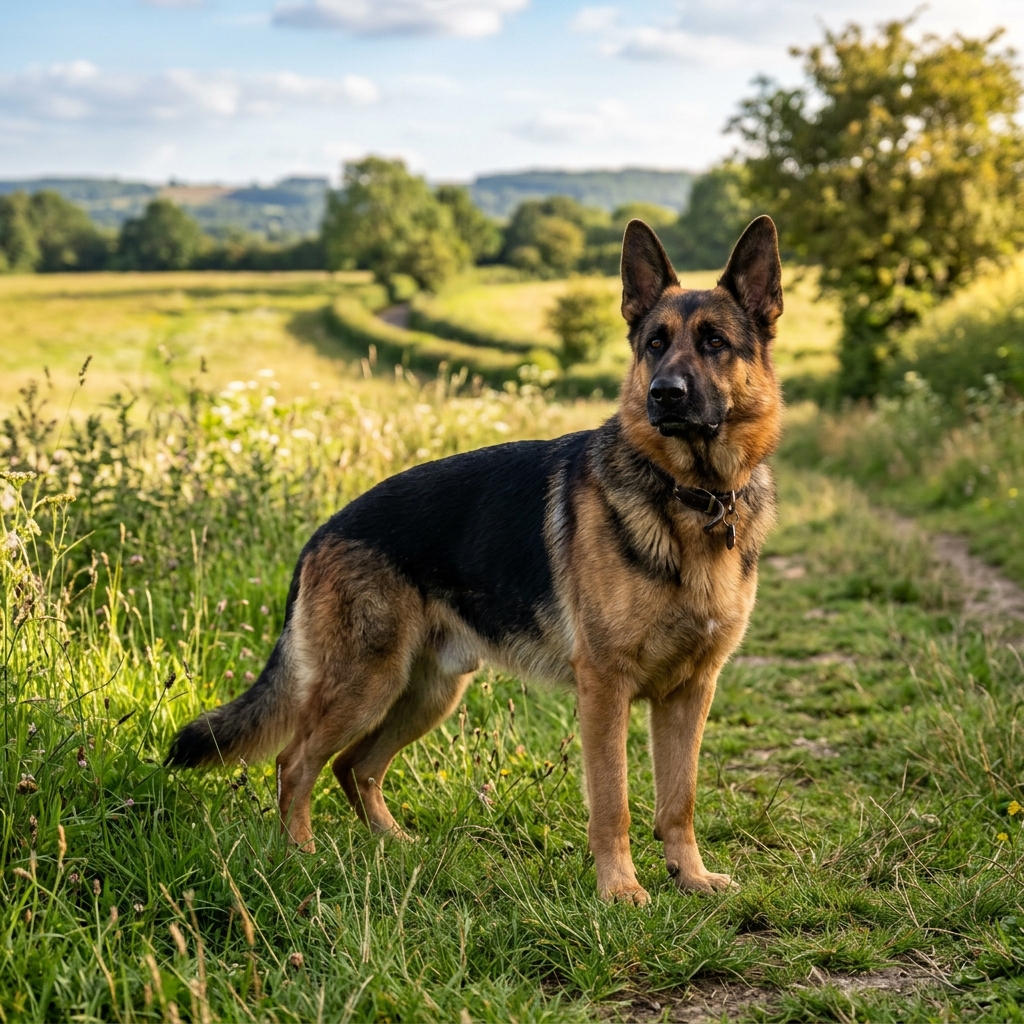
1. German Shepherd Physical Appearance
Adult German Shepherds stand between 22 and 26 inches tall at the shoulder and weigh between 75 and 95 pounds. They feature a lean, muscular, and agile frame. An extended muzzle and tall, erect ears are iconic facial characteristics that make these dogs instantly recognizable.
German Shepherds can have short, medium, or long double coats. Color variations include the classic black and tan, black and cream, red and black, or black and silver. Most display a distinct black mask on their faces and a black saddle pattern across their back. Reputable breeding programs do not breed GSDs with white, liver, or blue coats.
2. Personality and Temperament
The German Shepherd is characterized by intelligence, high watchfulness, and deep obedience. They display fierce loyalty toward their family but are naturally reserved or aloof around strangers. This alert nature makes them exceptional watchdogs.
When socialized from a young age, they interact wonderfully with children and act as both gentle companions and protectors. They can also live peacefully alongside cats and other household pets if introduced and desensitized during puppyhood. Introducing an adult German Shepherd to a home with existing pets may require structured guidance from a professional trainer.
3. History and Origins
Developed in Germany in the late 1800s by Captain Max von Stephanitz, the breed was created to be the ultimate herding and farm dog. During the two World Wars, the "German" title was omitted in English-speaking nations due to political tensions, leading the breed to be referred to as the Shepherd Dog or the Alsatian Wolf Dog in Europe.
Interest in the breed spread worldwide in the early 1900s, leading to formal recognition by the AKC in 1908. Today, they rank consistently as the 3rd most popular dog breed in the United States, appreciated as police, military, service, and family companions.
Fierce Loyalty Deserves Strong Protection
Protect your active German Shepherd with Lemonade Pet Insurance, covering hereditary conditions and unexpected injuries with lightning-fast claims processing.
Get German Shepherd Pet Insurance – Plans starting from around $12/month4. Care and Training
Training & Socialization
Obedience training and socialization should begin early, ideally around 10 weeks of age. Since German Shepherds are highly intelligent and work-oriented, they excel in tracking, agility, and herding. Positive training with rewards yields the best results.
Exercise & Activity
GSDs are active working dogs that require regular physical exercise and mental stimulation. A lack of daily exercise can result in frustration and destructive behaviors like excessive barking or chewing.
Grooming & Nutrition
Their double coat is easy to maintain, requiring quick brushing two or three times a week. During heavy shedding periods, more frequent brushing helps manage hair. Trim their nails monthly and feed a balanced diet divided into two daily meals.
5. Common German Shepherd Health Issues
Like many purebred dogs, German Shepherds have predispositions to specific hereditary health issues:
- Hip & Elbow Dysplasia: Inherited skeletal conditions where joints form incorrectly, leading to arthritis and severe front/rear limb lameness.
- Gastric Dilatation-Volvulus (Bloat): A dangerous condition where the stomach expands with gas and twists. Immediate surgical correction is required to save the dog's life.
- Degenerative Myelopathy: A progressive, neurological disease affecting the spinal cord of older dogs, causing coordination loss.
- Von Willebrand Disease: An inherited bleeding disorder caused by a lack of clotting proteins, causing excessive bleeding from minor cuts.
- Elbow Hygroma: A fluid-filled swelling that forms over the joint from chronic pressure on hard floors.
Get covered today
Insure your puppy or adult German Shepherd before any pre-existing symptoms emerge to guarantee full orthopedic coverage.
Get German Shepherd Pet Insurance – Plans starting from around $12/monthKey Takeaways
- Incredibly Loyal: Fiercely protective family dogs that do well with early obedience.
- High Stamina: Require daily physical workouts and agility sports to prevent behavior problems.
- Specific Genetic Concerns: High risk for hip and elbow dysplasia, which make having a good pet insurance plan essential.